What “Documentary Wedding Photography” Actually Means in Oxfordshire
September 4, 2026
Every photographer’s website says something similar now. Documentary this, editorial that, “capturing your day as it unfolds.” It’s become one of those phrases that gets used so often it stops meaning anything, a bit like “luxury” or “bespoke” — words that are supposed to signal something specific and have ended up signalling nothing at all.
So here’s what it actually means, at least the way we work as a documentary wedding photographer in Oxfordshire.
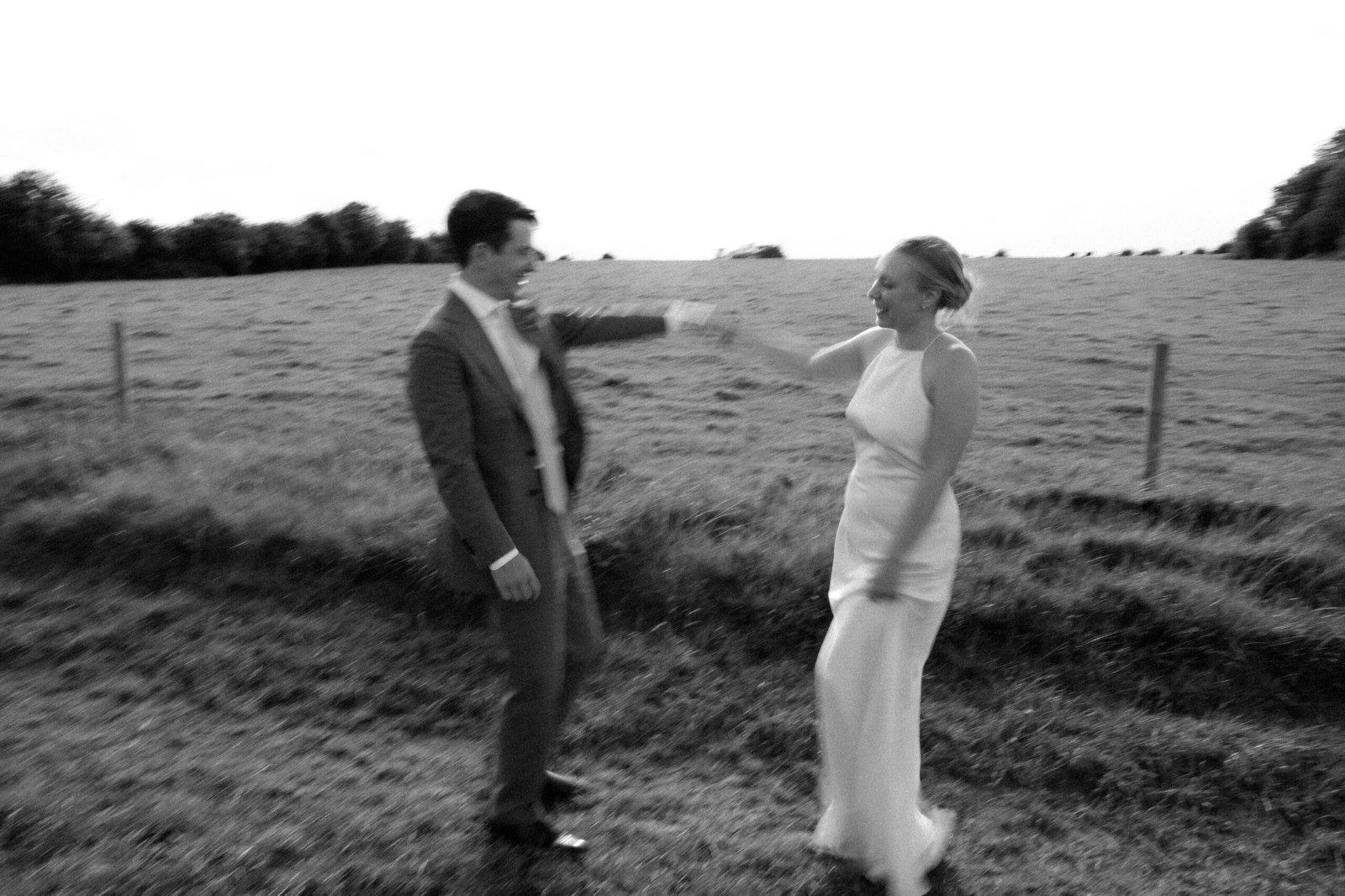
Documentary means we’re not directing your wedding. We’re not moving the wine glasses, we’re not asking you to “walk in again but slower,” we’re not treating your ceremony like a set that needs dressing. Most of the day is photographed as it happens, in the order it happens, without much interference from us. If you want a proper description: we’re there to notice things properly, not stage them.
That doesn’t mean we stand in a corner being invisible and hope for the best. There’s a difference between documentary and absent. We’ll step in for portraits, because good light and a bit of direction genuinely make those photographs better, and we’ll quietly manage a group shot so it doesn’t eat forty minutes of your reception. But the ceremony, the getting-ready chaos, the speeches, the bit where your nan finally gets the DJ to play something from 1974 — that’s yours, and we’re just there to see it properly.
Why Oxfordshire specifically
We’re based in Oxford, which means we know this county’s venues the way you know a route you’ve driven a hundred times — not just where the light falls best at 4pm in a college quad, but which registrars talk too fast, which barns lose their light by 6pm in October, and which “five minute walk” between ceremony and reception is actually closer to fifteen if anyone’s wearing the wrong shoes.
That local knowledge sounds like a small thing until your wedding day depends on it. Oxfordshire and the Cotswolds are full of genuinely stunning locations that are also, logistically, a bit of a nightmare — beautiful old buildings with terrible corridors, walled gardens that go dark the second a cloud rolls in, converted barns where the “getting ready room” is a converted stable with one plug socket. We’ve photographed enough of them to know where the photograph actually is, rather than where the brochure says it should be.
Digital and film, not digital or film
Most of a wedding day is photographed digitally — it’s reliable, it’s fast, and it lets us work without worrying about running out of film during the first dance. Woven through that, though, is real 35mm film: grainy, imperfect, a little unpredictable in a way that suits weddings better than most things.
Digital gives you the day in sharp, accurate detail. Film gives you something closer to how the day actually felt to be inside — slightly soft round the edges, a bit more forgiving, more atmosphere than accuracy. Put together, you get both: the documentary truth of it, and the romance of it.
What this looks like on the actual day
We turn up early enough to disappear. Arriving while everyone’s still half-dressed and mildly panicking means that by the time it matters, we’re just part of the furniture. Nobody performs for a camera that’s been in the room for two hours already.
We photograph the in-between bits. The ones that don’t make the shot list because nobody thinks to put them on it — your dad fixing his tie for the ninth time, someone’s kid asleep under a table by 9pm, the specific way your granddad claps at the wrong moment during the speeches. These are usually the photographs people care about most a decade later, not the posed ones.
We give direction exactly where it earns its place. Portraits, mainly, and the big family group shot everyone secretly dreads. Everywhere else, we mostly leave things alone.
We don’t disappear at the “important” bit and show up for the “photogenic” bit. A wedding day doesn’t stop being real once the confetti’s thrown. The quiet hour before everyone arrives matters as much as the first dance.
If you’re looking for a wedding photographer in Oxfordshire
We photograph weddings across Oxford, the wider county, and the Cotswolds — colleges and country houses, barns and gardens, town hall registry offices and marquees in fields that were, until recently, just fields. If you want photographs that look like your actual wedding rather than a stock version of one, that’s the job.
35mm film for the romance, digital for the documentary truth of it all.

Be the first to comment